June 19, 2026
How to use AI in your job search without getting rejected by ATS
AI can speed up your job search, but used badly it can make your CV sound generic or confuse ATS systems. Learn how to use AI smartly while keeping your own voice and strategy.
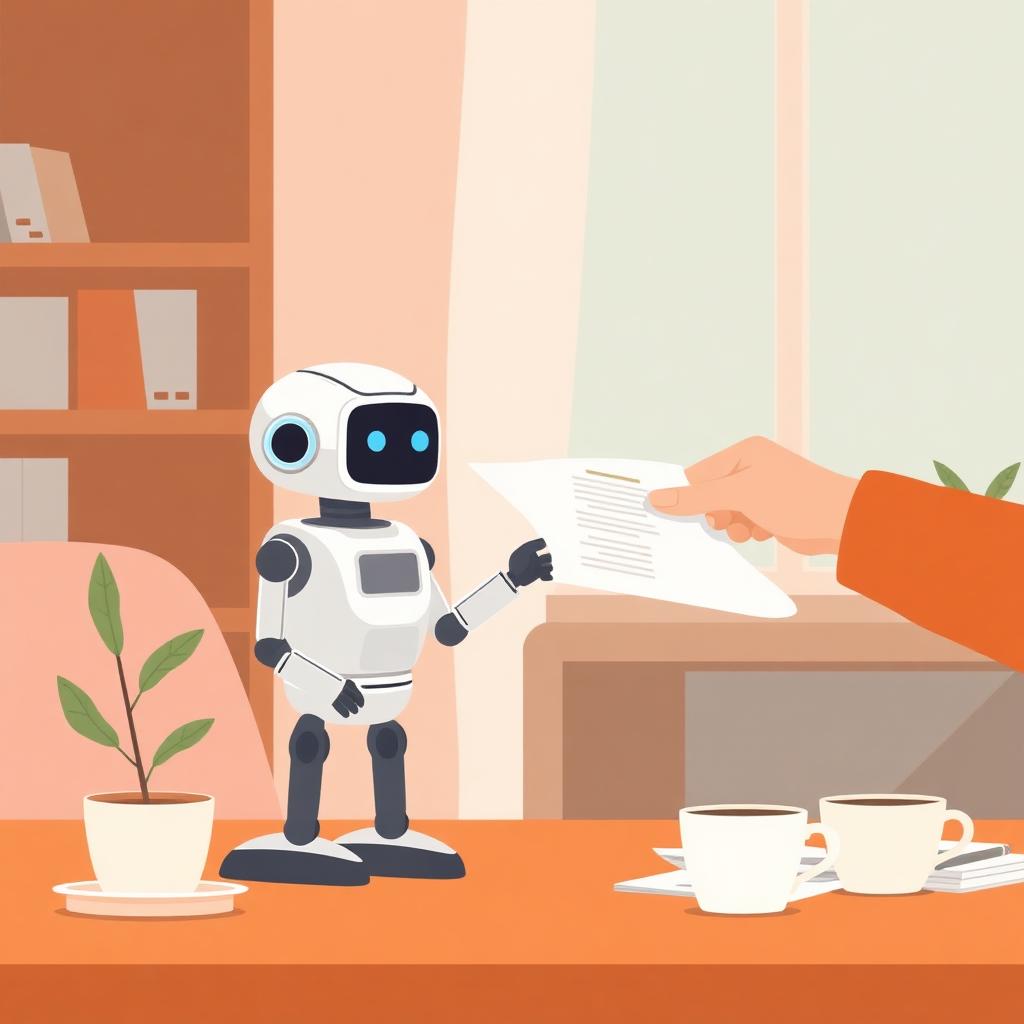
Use AI to research jobs, tailor CVs and prep interviews, but never let it write your CV end-to-end. ATS and recruiters catch AI-generated content. Practical prompts inside.
Artificial Intelligence is changing the way people look for jobs.
Today, you can use AI to write a CV, optimise your LinkedIn profile, prepare for interviews, research companies, and even build an entire job search strategy.
Sounds amazing, right?
It is… but there's a catch.
Used the wrong way, AI can actually hurt your chances of getting hired.
We've seen candidates submit generic AI-written CVs, send robotic networking messages, and walk into interviews sounding like they've memorised ChatGPT responses.
The result?
No interviews. No callbacks. No job offers.
At HULA, we believe AI should make your job search smarter and faster—but it should never replace your personality, your experience, or your strategy.
Here's how to use AI the right way.
1. Use AI as an Editor, Not a Ghostwriter
One of the biggest mistakes job seekers make is asking ChatGPT to:
"Write my CV."
The result usually sounds polished but generic. It often lacks personality, specific achievements, and the little details that make you stand out.
Recruiters can spot this immediately.
Instead, write your first draft yourself and use AI to improve it.
AI is excellent at:
✅ Fixing grammar and spelling
✅ Improving sentence structure
✅ Suggesting stronger action verbs
✅ Making your writing clearer and more concise
What AI should never do is invent your achievements or tell your story for you.
Your experience is what makes you unique.
2. Tailor Every Application to the Job Description
Sending the same CV to every company doesn't work anymore.
Every role is different, and recruiters expect to see relevant experience.
This is where AI becomes incredibly powerful.
Try this prompt:
I am applying for this role. Compare my CV with this job description and tell me:
• Which requirements I already meet
• Which skills I should highlight
• Which gaps I should address in my cover letter
• What keywords I should include naturally in my CV.
This approach allows you to customise your applications quickly without turning your CV into a keyword-stuffed document.
Remember:
The goal isn't to trick the ATS.
The goal is to show you're genuinely relevant to the role.
3. Make Sure Your CV Is ATS-Friendly
Applicant Tracking Systems (ATS) scan your CV before a recruiter even sees it.
If your formatting is difficult to read, your application may never make it to a human.
Before asking AI to improve your wording, make sure your CV is easy for ATS systems to process.
Keep it simple:
✅ Single-column layout
✅ Standard headings like Experience, Education and Skills
✅ Simple fonts
✅ Save as .docx or a clean PDF
Avoid:
❌ Tables
❌ Graphics
❌ Text boxes
❌ Headers and footers
❌ Fancy templates
A beautiful CV that can't be read by ATS is useless.
4. Use AI to Prepare for Interviews (But Don't Memorise Answers)
AI is fantastic for interview preparation.
You can ask it to:
Generate likely interview questions
Help you structure answers using the STAR method
Simulate interviews
Give feedback on your responses
But there's a danger.
Many candidates end up memorising AI-generated answers.
Interviewers notice immediately.
The best interviews feel like conversations, not scripts.
Use AI to organise your thoughts, but always answer using your own experiences and stories.
People hire people.
Not robots.
5. Research Companies Faster
Research is one of the most underrated parts of the job search process.
Most candidates skip it completely.
AI can help you understand:
What a company does
Its values and culture
Recent news and announcements
Products and services
Industry trends
Salary expectations
This information can help you:
✅ Write better cover letters
✅ Ask smarter interview questions
✅ Decide if a company is right for you
✅ Stand out from other candidates
6. Network Smarter, Not Harder
Networking remains one of the best ways to find opportunities.
AI can help you write:
LinkedIn connection requests
Follow-up messages
Introductory emails
Thank-you notes
But don't let AI write generic messages.
The best networking messages are personal.
Mention:
A post they shared
A project they worked on
Something you have in common
Why you specifically wanted to connect
AI can help with the wording.
The relevance has to come from you.
7. Use AI to Stay Organised
A successful job search isn't about applying to hundreds of jobs.
It's about consistency.
Use AI or simple spreadsheets to track:
Applications submitted
Interview stages
Follow-up dates
Companies of interest
Feedback received
After a few weeks, you'll start noticing patterns.
Maybe marketing startups reply more often than large corporations.
Maybe your networking efforts generate more interviews than job boards.
Data helps you make better decisions.
The Biggest Opportunity Most People Miss
Most people use AI at the end of the process:
"Fix my CV."
"Write my cover letter."
"Improve my LinkedIn."
The real opportunity is using AI at the beginning.
Ask AI:
What careers fit my experience?
Which countries offer the best opportunities for my profile?
Which industries should I target?
What skills should I develop next?
What companies should I focus on?
AI is incredibly powerful when used for strategy, not just writing.
The HULA Approach: AI + Human Strategy
At HULA, we believe the future of job searching is a combination of:
AI speed + Human guidance.
The professionals who stand out in 2026 won't be the ones who use the most AI.
They'll be the ones who use AI intelligently while keeping their personality, experience, and strategy at the centre of everything they do.
That means:
✅ Using AI to accelerate your work, not replace your thinking.
✅ Keeping your voice and achievements authentic.
✅ Tailoring every application.
✅ Preparing strategically for interviews.
✅ Building a job search plan that actually fits your goals.
Ready to Use AI the Right Way?
If you're tired of generic advice and want a personalised strategy that combines AI tools with real human support, we'd love to help.
At HULA Career, we help international professionals use AI to:
Build stronger CVs and LinkedIn profiles
Develop smarter job search strategies
Prepare for interviews
Improve networking
Find opportunities that genuinely fit their goals
Because getting a job today isn't just about working harder.
It's about working smarter.

Written by
Hugo F
I've worked with companies like LinkedIn, Indeed and global SaaS organizations, understanding how modern hiring, ATS systems and recruiter processes really work. I've helped 500+ professionals improve their CVs, LinkedIn profiles and job search strategies across Ireland, the UK and Europe. I combined that experience with AI to build something different: A system that doesn't just improve your CV, but gives you a clear strategy to land a job.
Frequently asked questions
Will ATS detect AI-written CVs?
ATS don't run AI detection, but recruiters spot AI phrasing in seconds. The bigger risk is interview mismatch when your CV oversells what you can talk about.
Is it ok to use ChatGPT for cover letters?
Use it to draft and edit, never to send raw output. Add specifics only you know: names, numbers, projects.
Which parts of the job search should I automate?
Research (companies, salaries), keyword extraction from job ads, interview practice, and email drafting. Not the CV itself and not applying at scale.
Are AI job-apply bots worth it?
No. They spam recruiters, get flagged, and land you on internal blocklists at target companies.
Related guides

London vs Dublin 2026: Cost of Living, Salaries and Which Pays Off
A side by side comparison of rent, tax, childcare and salaries in London and Dublin in 2026, and how much you keep at the end of the month in each.

Cost of Living in Cork and Galway 2026: Cheaper Than Dublin, but How Much?
Rent, bills and salaries in Cork and Galway in 2026, how much less you need than in Dublin, and which employers actually hire there.

Cost of Living in Dublin 2026: The Salary You Actually Need
What rent, bills, transport and groceries really cost in Dublin in 2026, and the gross salary a single person, a couple and a family need to live without stress.