
September 16, 2026
London vs Dublin 2026: Cost of Living, Salaries and Which Pays Off
A side by side comparison of rent, tax, childcare and salaries in London and Dublin in 2026, and how much you keep at the end of the month in each.
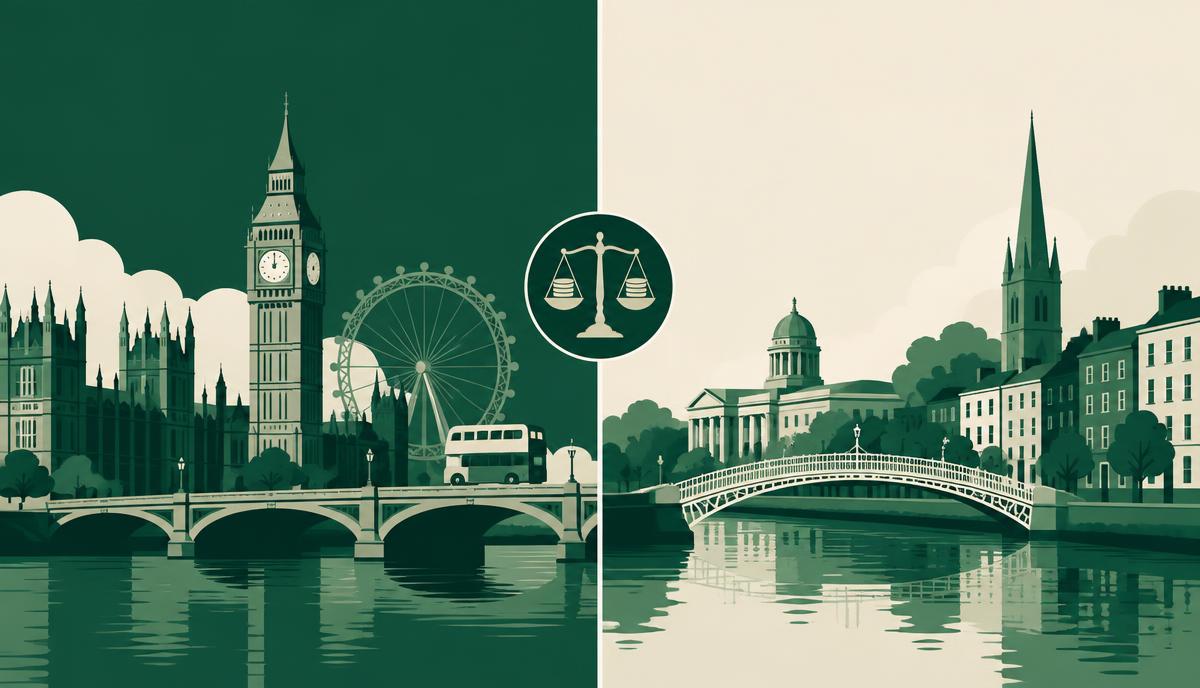
London pays higher headline salaries in finance, law and senior tech. Dublin keeps more of it in your pocket because rent outside the centre is cheaper relative to pay, and tech and pharma salaries are close. For most mid level professionals the disposable income gap is small. The decision usually comes down to visa route and sector, not money.
The straight comparison
| Monthly, single professional | London | Dublin |
|---|---|---|
| Room in a shared flat/house | GBP 1,050 to 1,400 | EUR 900 to 1,200 |
| 1 bed apartment | GBP 1,900 to 2,500 | EUR 1,900 to 2,400 |
| Utilities and broadband | GBP 180 | EUR 245 |
| Public transport | GBP 180 (zones 1 to 3) | EUR 100 (Leap card cap) |
| Groceries | GBP 300 | EUR 350 |
| Childcare, one child | GBP 1,200 to 1,800 | EUR 900 to 1,300 |
| Take home share of gross | about 70 to 75 percent | about 68 to 75 percent |
Salaries: where each city wins
- Finance, law, consulting: London wins clearly, often 25 to 40 percent higher at senior level.
- Software engineering and cloud: close. London edges ahead at staff and principal level, Dublin is competitive at mid level thanks to the multinational cluster.
- Pharma, med devices, regulatory: Dublin wins. The cluster in Dublin, Cork and Galway pays above the UK equivalent.
- Marketing, sales and customer facing multilingual roles: Dublin wins on volume of roles, London on ceiling.
Tax and the number that actually matters
Both countries take a similar bite at professional salary levels once you count PAYE plus PRSI and USC in Ireland, or income tax plus National Insurance in the UK. Ireland is harsher on single high earners, the UK is harsher on households once child benefit tapering kicks in. Compare disposable income after rent, not gross salary.
Visa and permit routes
This is the real decider for most international professionals. Ireland uses the Critical Skills Employment Permit with a fast path to Stamp 4, and family members can work. The UK uses the Skilled Worker visa, which requires a licensed sponsor and carries significant fees including the immigration health surcharge. Details: Ireland work permit and UK Skilled Worker visa.
How to decide in one afternoon
- Write your target role and pull the salary range for both cities from local data.
- Subtract realistic rent for the housing setup you actually want.
- Add the visa cost and timeline for each route.
- Pick the city where the remaining number and the sector depth both work.
Next steps
- Dublin cost of living in detail
- Ireland CV format and UK CV format are different, use the right one
- Book a free consultation and we will compare the two offers or two markets with you

Written by
Hugo F
Founder of HULA Career Coaching. Helping international professionals land jobs in Ireland, the UK and Europe.
Frequently asked questions
Is Dublin cheaper than London?
Rent for a one bed is similar, but Dublin transport and childcare are cheaper and London groceries are slightly cheaper. Overall cost is close, with Dublin marginally lower for families.
Are salaries higher in London or Dublin?
London is higher in finance, law and senior tech. Dublin is higher in pharma and med devices and comparable in mid level software.
Which is easier for a work visa, Ireland or the UK?
Ireland is usually faster for eligible roles via the Critical Skills Employment Permit, which also gives spouses the right to work and a path to Stamp 4. The UK Skilled Worker visa requires a licensed sponsor and higher fees.
Related guides

Cost of Living in Cork and Galway 2026: Cheaper Than Dublin, but How Much?
Rent, bills and salaries in Cork and Galway in 2026, how much less you need than in Dublin, and which employers actually hire there.
Cost of Living in Dublin 2026: The Salary You Actually Need
What rent, bills, transport and groceries really cost in Dublin in 2026, and the gross salary a single person, a couple and a family need to live without stress.

Recruitment Agencies in Ireland: How to Actually Use Them
How Irish recruitment agencies really work, which ones matter by sector, what to say in the first call, and the mistakes that get you quietly dropped.